Photography, Linux, MySQL, Python, WordPress, Book Geek
13710 stories
·
8 followers

Mike Johnson won't hang a plaque honoring the cops who defended Congress

1 Share

More than 100 members of Congress are now displaying replicas of a memorial plaque honoring the police officers who defended the U.S. Capitol on January 6 because Speaker Mike Johnson refuses to install the original.

The plaque is not symbolic. It is not optional. — Read the rest

The post Mike Johnson won't hang a plaque honoring the cops who defended Congress appeared first on Boing Boing.

Read the whole story
Manzabar
2 hours ago
reply
Cedar Rapids
Share this story
Delete

Rian Johnson confirms Rickroll in latest Knives Out entry

1 Share

An amateur ecclesiastical architecture enthusiast on Bluesky made a fun catch in Wake Up Dead Man: A Knives Out Mystery. Poet and preacher Jay Hulme noticed that a scene in the third entry in the Knives Out series was filmed in the same location as the music video/meme "Never Gonna Give You Up." — Read the rest

The post Rian Johnson confirms Rickroll in latest Knives Out entry appeared first on Boing Boing.

Read the whole story
Manzabar
1 day ago
reply
Cedar Rapids
Share this story
Delete

Meet Aloka, the "Peace Dog" who has joined 19 Buddhist monks on a "Walk for Peace" across the US

1 Share
By Netrikan - Own work, CC BY-SA 4.0, Link CC BY-SA 4.0

One of the most remarkable events of 2025 that continues into 2026 is the 120-day, 2,300-mile "Walk for Peace" currently being undertaken by nineteen Buddhist monks and a rescue dog named Aloka, dubbed the "Peace Dog." The Asheville Citizen Times explains that the Walk for Peace, led by monk Bhikkhu Pannakara, began at the Huong Dao Vipassana Bhavana Center in Fort Worth, Texas, on October 26, 2025, and will continue to Washington, DC, over 120 days.Read the rest

The post Meet Aloka, the "Peace Dog" who has joined 19 Buddhist monks on a "Walk for Peace" across the US appeared first on Boing Boing.

Read the whole story
Manzabar
1 day ago
reply
Cedar Rapids
Share this story
Delete

"Cronyism in couture": Vanity Fair publishes brilliant new portraits, capturing the "hideousness of this administration"

1 Share
Karoline Leavitt, USA Propaganda Queen. sticker spotted in Mandeville, Louisiana. photo: Jennifer Sandlin

Go grab yourself a cup of coffee (or a shot of tequila) and fire up your computer, because you really must take a few minutes to soak in the new article written by Chris Whipple and recently published in Vanity Fair. — Read the rest

The post "Cronyism in couture": Vanity Fair publishes brilliant new portraits, capturing the "hideousness of this administration" appeared first on Boing Boing.

Read the whole story
Manzabar
19 days ago
reply
Cedar Rapids
Share this story
Delete

Finally: Rep. Haley Stevens Files Articles Of Impeachment For RFK Jr.

1 Share

We’ve obviously done a ton of coverage on RFK Jr. as the head of Health and Human Services because, well, he’s an unmitigated disaster. Between all the chaos he’s created with his hiring/firing practices at HHS and its child agencies, the mass exodus of talent from those agencies, and all the anti-vaxx bullshit he’s pulled with ACIP, the CDC, and agency websites, he’s a damned problem and not nearly enough of our Congress people seem willing to do anything about it. And that’s not even getting into the ongoing measles and pertussis outbreaks that are occurring in several states as we speak.

In many of our posts on Kennedy, we have begged for someone to do something about all of this. One of those possible things that could be done is to at least try to impeach this brain-wormed assclown. And now, finally, someone did. Rep. Haley Stevens of Mighigan introduced articles of impeachment this week.

“RFK Jr. has got to go. Today, I introduced articles of impeachment to remove him from office. RFK Jr. has turned his back on science and public health and on the American people,” Stevens said in a video statement released on the social platform X. “Under his watch, families are less safe, health care costs are skyrocketing, and lifesaving research — including right here in Michigan — is being gutted,” she said in the video.

“I cannot and I will not stand by while one man dismantles decades of medical progress,” she continued. “Enough is enough, and that is why I’m pushing to impeach RFK Jr., to hold him accountable and to protect the health, safety and future of every Michigander because our health, our science and our future are worth fighting for.”

Now, let me prepare you for what you’re about to hear. Stevens, as mentioned, is campaigning for a Senate seat in her state. Thus far, polling suggests it’s not going all that well, with Stevens trailing Republican Mike Rogers by several points, though she has been closing the gap recently. What you’re going to hear about this, from Republicans and some Democrats, is that this impeachment effort is a stunt to raise Stevens’ profile in the race to get more name recognition and build turnout among Democrats.

Let me make this as clear as I possibly can: even if that is true, I don’t fucking care. If that’s what it takes to at least attempt to oust Kennedy from his role, so be it. But I also do not think that is what Stevens is doing, given her larger track record on Kennedy.

Stevens has repeatedly called for Kennedy’s removal from his role since he became HHS secretary and said in September she intended to file impeachment articles against him over the “heath care chaos” under his watch. The measure is not likely to pass in a Republicans-controlled Congress.

We’ll just have to see about that last bit. It’s probably correct that Republicans won’t go against Dear Leader and do the right thing, but they should be put on the record as such. Vote against impeachment if you wish. Make yourself a responsible party to all of the horrors Kennedy has, is, and will visit upon Americans’ health. The deaths from measles. The Hep B infections in newborns, along with the long-tail health effects of those infections, including deaths. Declining vaccination rates due to the misinformation vomited from Kennedy and his hand-picked cadre of cronies. A vote against impeaching Kennedy will serve as cosigning all of the above. All of it.

Bill Cassidy could certainly help here, if he wants to stop being a partisan for ten minutes and put his doctor’s coat back on. Cassidy was a crucial vote in Kennedy’s confirmation to HHS, as well as being something of a silent whip for other Republican votes that were unsure on voting for Kennedy’s confirmation. He can likewise now serve the opposite purpose. He can come out in favor of Stevens’ articles of impeachment, whip Republican votes for it, and begin to undo the harm that he helped create through the confirmation process. He’s spilled plenty of words worrying out loud about what Kennedy is doing. Now let him back it up.

Either way, get everyone on the record. Are you okay with Kennedy’s dismantling of decades of progress made on various matters of health, or are you not? That is what an impeachment vote would be asking.

Read the whole story
Manzabar
20 days ago
reply
Cedar Rapids
Share this story
Delete

How Cops Are Using Flock Safety’s ALPR Network To Surveil Protesters And Activists

1 Share

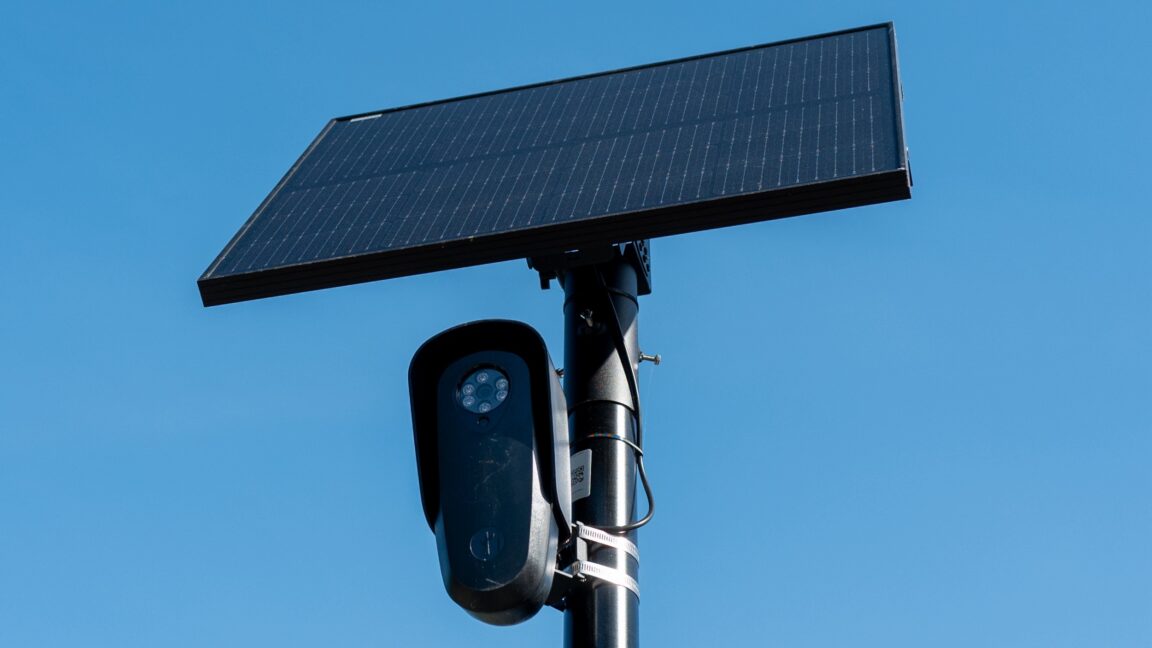
It’s no secret that 2025 has given Americans plenty to protest about. But as news cameras showed protesters filling streets of cities across the country, law enforcement officers—including U.S. Border Patrol agents—were quietly watching those same streets through different lenses: Flock Safety automated license plate readers (ALPRs) that tracked every passing car. 

Through an analysis of 10 months of nationwide searches on Flock Safety’s servers, we discovered that more than 50 federal, state, and local agencies ran hundreds of searches through Flock’s national network of surveillance data in connection with protest activity. In some cases, law enforcement specifically targeted known activist groups, demonstrating how mass surveillance technology increasingly threatens our freedom to demonstrate. 

Flock Safety provides ALPR technology to thousands of law enforcement agencies. The company installs cameras throughout their jurisdictions, and these cameras photograph every car that passes, documenting the license plate, color, make, model and other distinguishing characteristics. This data is paired with time and location, and uploaded to a massive searchable database. Flock Safety encourages agencies to share the data they collect broadly with other agencies across the country. It is common for an agency to search thousands of networks nationwide even when they don’t have reason to believe a targeted vehicle left the region. 

Via public records requests, EFF obtained datasets representing more than 12 million searches logged by more than 3,900 agencies between December 2024 and October 2025. The data shows that agencies logged hundreds of searches related to the 50501 protests in February, the Hands Off protests in April, the No Kings protests in June and October, and other protests in between. 

The Tulsa Police Department in Oklahoma was one of the most consistent users of Flock Safety’s ALPR system for investigating protests, logging at least 38 such searches. This included running searches that corresponded to a protest against deportation raids in February, a protest at Tulsa City Hall in support of pro-Palestinian activist Mahmoud Khalil in March, and the No Kings protest in June. During the most recent No Kings protests in mid-October, agencies such as the Lisle Police Department in Illinois, the Oro Valley Police Department in Arizona, and the Putnam County (Tenn.) Sheriff’s Office all ran protest-related searches. 

While EFF and other civil liberties groups argue the law should require a search warrant for such searches, police are simply prompted to enter text into a “reason” field in the Flock Safety system. Usually this is only a few words–or even just one.

In these cases, that word was often just “protest.” 

Crime does sometimes occur at protests, whether that’s property damage, pick-pocketing, or clashes between groups on opposite sides of a protest. Some of these searches may have been tied to an actual crime that occurred, even though in most cases officers did not articulate a criminal offense when running the search. But the truth is, the only reason an officer is able to even search for a suspect at a protest is because ALPRs collected data on every single person who attended the protest. 

Search and Dissent 

2025 was an unprecedented year of street action. In June and again in October, thousands across the country mobilized under the banner of the “No Kings” movement—marches against government overreach, surveillance, and corporate power. By some estimates, the October demonstrations ranked among the largest single-day protests in U.S. history, filling the streets from Washington, D.C., to Portland, OR. 

EFF identified 19 agencies that logged dozens of searches associated with the No Kings protests in June and October 2025. In some cases the “No Kings” was explicitly used, while in others the term “protest” was used but coincided with the massive protests.

Law Enforcement Agencies that Ran Searches Corresponding with “No Kings” Rallies
* Anaheim Police Department, Calif.
* Arizona Department of Public Safety
* Beaumont Police Department, Texas
* Charleston Police Department, SC
* Flagler County Sheriff’s Office, Fla.
* Georgia State Patrol
* Lisle Police Department, Ill.
* Little Rock Police Department, Ark.
* Marion Police Department, Ohio
* Morristown Police Department, Tenn.
* Oro Valley Police Department, Ariz.
* Putnam County Sheriff’s Office, Tenn.
* Richmond Police Department, Va.
* Riverside County Sheriff’s Office, Calif.
* Salinas Police Department, Calif.
* San Bernardino County Sheriff’s Office, Calif.
* Spartanburg Police Department, SC
* Tempe Police Department, Ariz.
* Tulsa Police Department, Okla.
* US Border Patrol

For example: 

  • In Washington state, the Spokane County Sheriff’s Office listed “no kings” as the reason for three searches on June 15, 2025 [Note: date corrected]. The agency queried 95 camera networks, looking for vehicles matching the description of “work van,” “bus” or “box truck.” 
  • In Texas, the Beaumont Police Department ran six searches related to two vehicles on June 14, 2025, listing “KINGS DAY PROTEST” as the reason. The queries reached across 1,774 networks. 
  • In California, the San Bernardino County Sheriff’s Office ran a single search for a vehicle across 711 networks, logging “no king” as the reason. 
  • In Arizona, the Tempe Police Department made three searches for “ATL No Kings Protest” on June 15, 2025 searching through 425 networks. “ATL” is police code for “attempt to locate.” The agency appears to not have been looking for a particular plate, but for any red vehicle on the road during a certain time window.

But the No Kings protests weren’t the only demonstrations drawing law enforcement’s digital dragnet in 2025. 

For example:

  • In Nevada’s state capital, the Carson City Sheriff’s Office ran three searches that correspond to the February 50501 Protests against DOGE and the Trump administration. The agency searched for two vehicles across 178 networks with “protest” as the reason.
  • In Florida, the Seminole County Sheriff’s Office logged “protest” for five searches that correspond to a local May Day rally.
  • In Alabama, the Homewood Police Department logged four searches in early July 2025 for three vehicles with “PROTEST CASE” and “PROTEST INV.” in the reason field. The searches, which probed 1,308 networks, correspond to protests against the police shooting of Jabari Peoples.
  • In Texas, the Lubbock Police Department ran two searches for a Tennessee license plate on March 15 that corresponds to a rally to highlight the mental health impact of immigration policies. The searches hit 5,966 networks, with the logged reason “protest veh.”
  • In Michigan, Grand Rapids Police Department ran five searches that corresponded with the Stand Up and Fight Back Rally in February. The searches hit roughly 650 networks, with the reason logged as “Protest.”

Some agencies have adopted policies that prohibit using ALPRs for monitoring activities protected by the First Amendment. Yet many officers probed the nationwide network with terms like “protest” without articulating an actual crime under investigation.

In a few cases, police were using Flock’s ALPR network to investigate threats made against attendees or incidents where motorists opposed to the protests drove their vehicle into crowds. For example, throughout June 2025, an Arizona Department of Public Safety officer logged three searches for “no kings rock threat,” and a Wichita (Kan.) Police Department officer logged 22 searches for various license plates under the reason “Crime Stoppers Tip of causing harm during protests.”

Even when law enforcement is specifically looking for vehicles engaged in potentially criminal behavior such as threatening protesters, it cannot be ignored that mass surveillance systems work by collecting data on everyone driving to or near a protest—not just those under suspicion.

Border Patrol’s Expanding Reach 

As U.S. Border Patrol (USBP), ICE, and other federal agencies tasked with immigration enforcement have massively expanded operations into major cities, advocates for immigrants have responded through organized rallies, rapid-response confrontations, and extended presences at federal facilities. 

USBP has made extensive use of Flock Safety’s system for immigration enforcement, but also to target those who object to its tactics. In June, a few days after the No Kings Protest, USBP ran three searches for a vehicle using the descriptor “Portland Riots.” 

USBP also used the Flock Safety network to investigate a motorist who had “extended his middle finger” at Border Patrol vehicles that were transporting detainees. The motorist then allegedly drove in front of one of the vehicles and slowed down, forcing the Border Patrol vehicle to brake hard. An officer ran seven searches for his plate, citing “assault on agent” and “18 usc 111,” the federal criminal statute for assaulting, resisting or impeding a federal officer. The individual was charged in federal court in early August. 

USBP had access to the Flock system during a trial period in the first half of 2025, but the company says it has since paused the agency’s access to the system. However, Border Patrol and other federal immigration authorities have been able to access the system’s data through local agencies who have run searches on their behalf or even lent them logins

Targeting Animal Rights Activists

Law enforcement’s use of Flock’s ALPR network to surveil protesters isn’t limited to large-scale political demonstrations. Three agencies also used the system dozens of times to specifically target activists from Direct Action Everywhere (DxE), an animal-rights organization known for using civil disobedience tactics to expose conditions at factory farms.

Delaware State Police queried the Flock national network nine times in March 2025 related to DxE actions, logging reasons such as “DxE Protest Suspect Vehicle.” DxE advocates told EFF that these searches correspond to an investigation the organization undertook of a Mountaire Farms facility. 

Additionally, the California Highway Patrol logged dozens of searches related to a “DXE Operation” throughout the day on May 27, 2025. The organization says this corresponds with an annual convening in California that typically ends in a direct action. Participants leave the event early in the morning, then drive across the state to a predetermined but previously undisclosed protest site. Also in May, the Merced County Sheriff’s Office in California logged two searches related to “DXE activity.” 

As an organization engaged in direct activism, DxE has experienced criminal prosecution for its activities, and so the organization told EFF they were not surprised to learn they are under scrutiny from law enforcement, particularly considering how industrial farmers have collected and distributed their own intelligence to police.

The targeting of DxE activists reveals how ALPR surveillance extends beyond conventional and large-scale political protests to target groups engaged in activism that challenges powerful industries. For animal-rights activists, the knowledge that their vehicles are being tracked through a national surveillance network undeniably creates a chilling effect on their ability to organize and demonstrate.

Fighting Back Against ALPR 

ALPR systems are designed to capture information on every vehicle that passes within view. That means they don’t just capture data on “criminals” but on everyone, all the time—and that includes people engaged in their First Amendment right to publicly dissent. Police are sitting on massive troves of data that can reveal who attended a protest, and this data shows they are not afraid to use it. 

Our analysis only includes data where agencies explicitly mentioned protests or related terms in the “reason” field when documenting their search. It’s likely that scores more were conducted under less obvious pretexts and search reasons. According to our analysis, approximately 20 percent of all searches we reviewed listed vague language like “investigation,” “suspect,” and “query” in the reason field. Those terms could well be cover for spying on a protest, an abortion prosecution, or an officer stalking a spouse, and no one would be the wiser–including the agencies whose data was searched. Flock has said it will now require officers to select a specific crime under investigation, but that can and will also be used to obfuscate dubious searches. 

For protestors, this data should serve as confirmation that ALPR surveillance has been and will be used to target activities protected by the First Amendment. Depending on your threat model, this means you should think carefully about how you arrive at protests, and explore options such as by biking, walking, carpooling, taking public transportation, or simply parking a little further away from the action. Our Surveillance Self-Defense project has more information on steps you could take to protect your privacy when traveling to and attending a protest.

For local officials, this should serve as another example of how systems marketed as protecting your community may actually threaten the values your communities hold most dear. The best way to protect people is to shut down these camera networks.  

Everyone should have the right to speak up against injustice without ending up in a database. 

Originally posted to the EFF’s Deeplinks blog.

Read the whole story
Manzabar
20 days ago
reply
Cedar Rapids
Share this story
Delete
Next Page of Stories